 and our new web domain is Circular.nyc



Part 1 Adapting for Learning: Staten Island Tech Renovation - Introduction
2025.11.25
 Share
Share
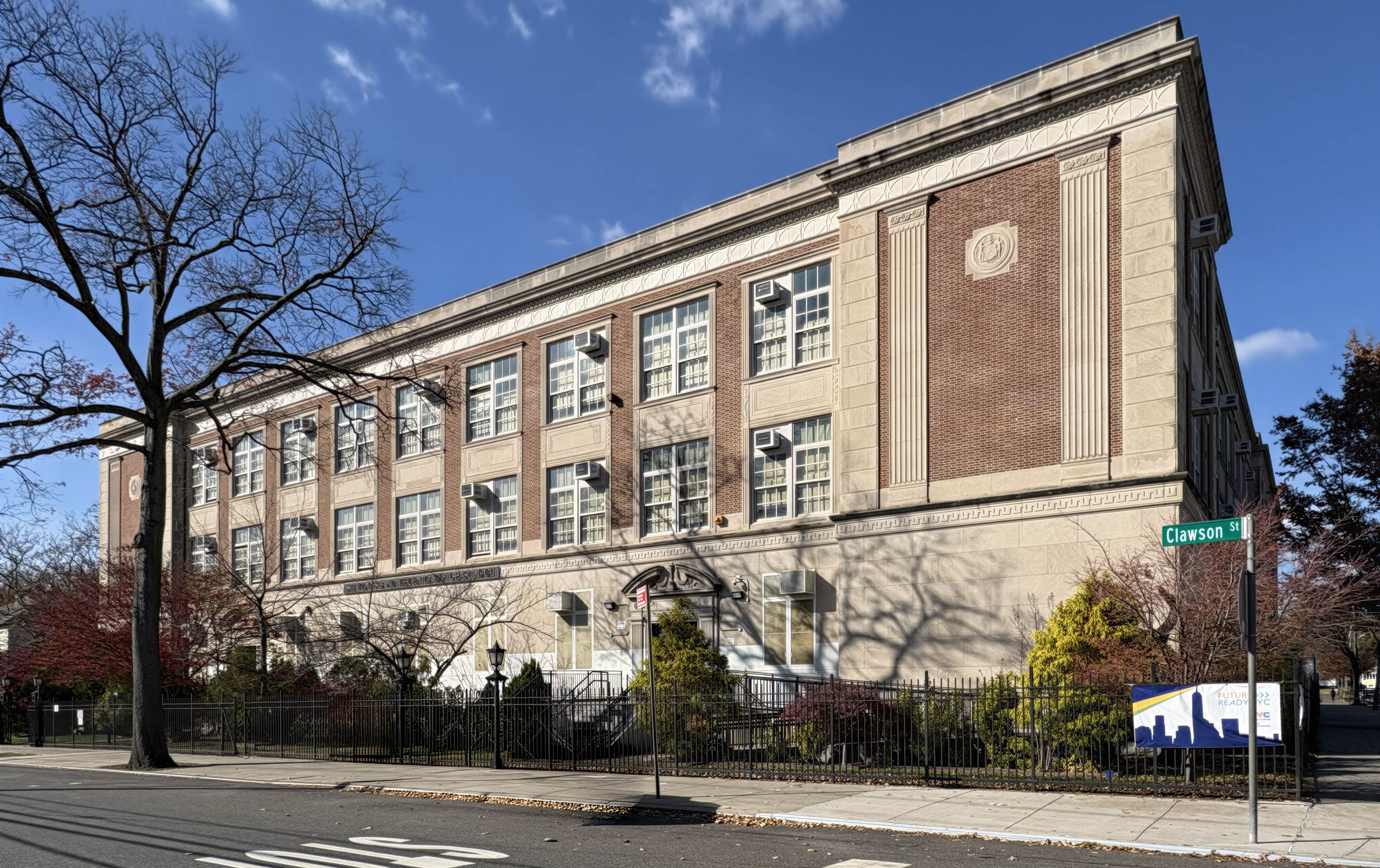
Staten Island Tech: A School with Layers
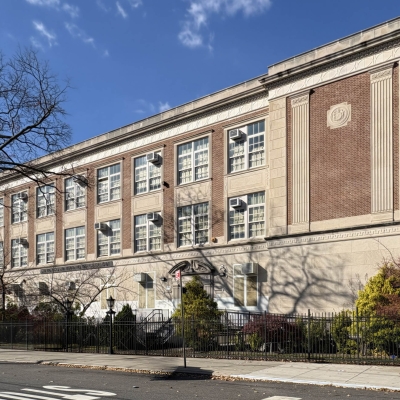
Founded in 1988 and designated a Specialized High School in 2005, Staten Island Tech is known for its advanced curriculum and high-performing students. It currently occupies a building rich with history, originally constructed in 1936 as the Dorp School, with a west wing added in the 1960s. The architecture reflects classic mid-century institutional style: simple, efficient, and built to last.
Over the decades, the school has received multiple updates, including accessibility retrofits, electrical improvements, and exterior restorations. But like many NYC schools, some interior layouts haven’t kept pace with evolving educational programs. That’s where this renovation comes in.
This Capital Task Force project calls for the conversion of a ground-floor classroom and part of an adjacent girls’ restroom into a new Environmental Science Lab. The remaining restroom area will also be renovated to better serve students and meet current code.
Our design will upgrade the space to support a hands-on, STEM-based curriculum while navigating the complexities of a historic building that is both well-preserved and spatially constrained.
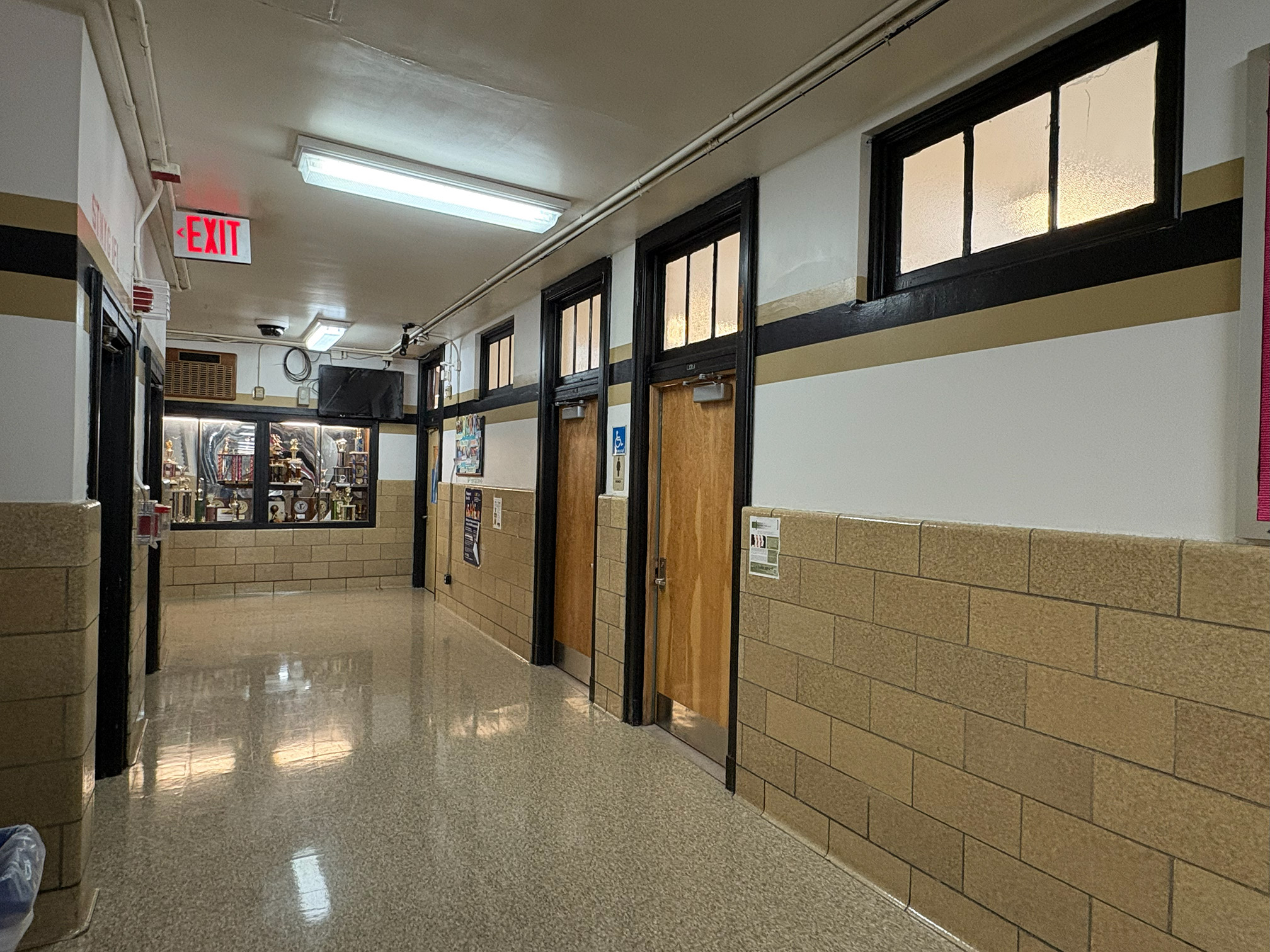
Our design will upgrade the space to support a hands-on, STEM-based curriculum while navigating the complexities of a historic building that is both well-preserved and spatially constrained.
What We Are Working With: Solid Bones, Functional Gaps
The classroom retains its original 1940s character, with wood flooring, built-in casework, and exposed brick beneath large windows. Finishes throughout, including walls, ceilings, and doors, show signs of wear but appear to be well cared for. Prior upgrades have enhanced accessibility and electrical systems. However, the room falls short for its intended use. It lacks sinks, provides no electrical access to the center of the room, has limited floor space, and features fragile finishes that are not suited for science instruction.
The adjacent girls’ restroom also shows its age. It is not in particularly good condition, with visible patchwork in the mosaic tile floor, likely from earlier accessibility renovations. While the plaster walls and ceilings remain intact, the layout is inefficient, with too many toilet stalls and not enough sinks, leaving much of the space underutilized.
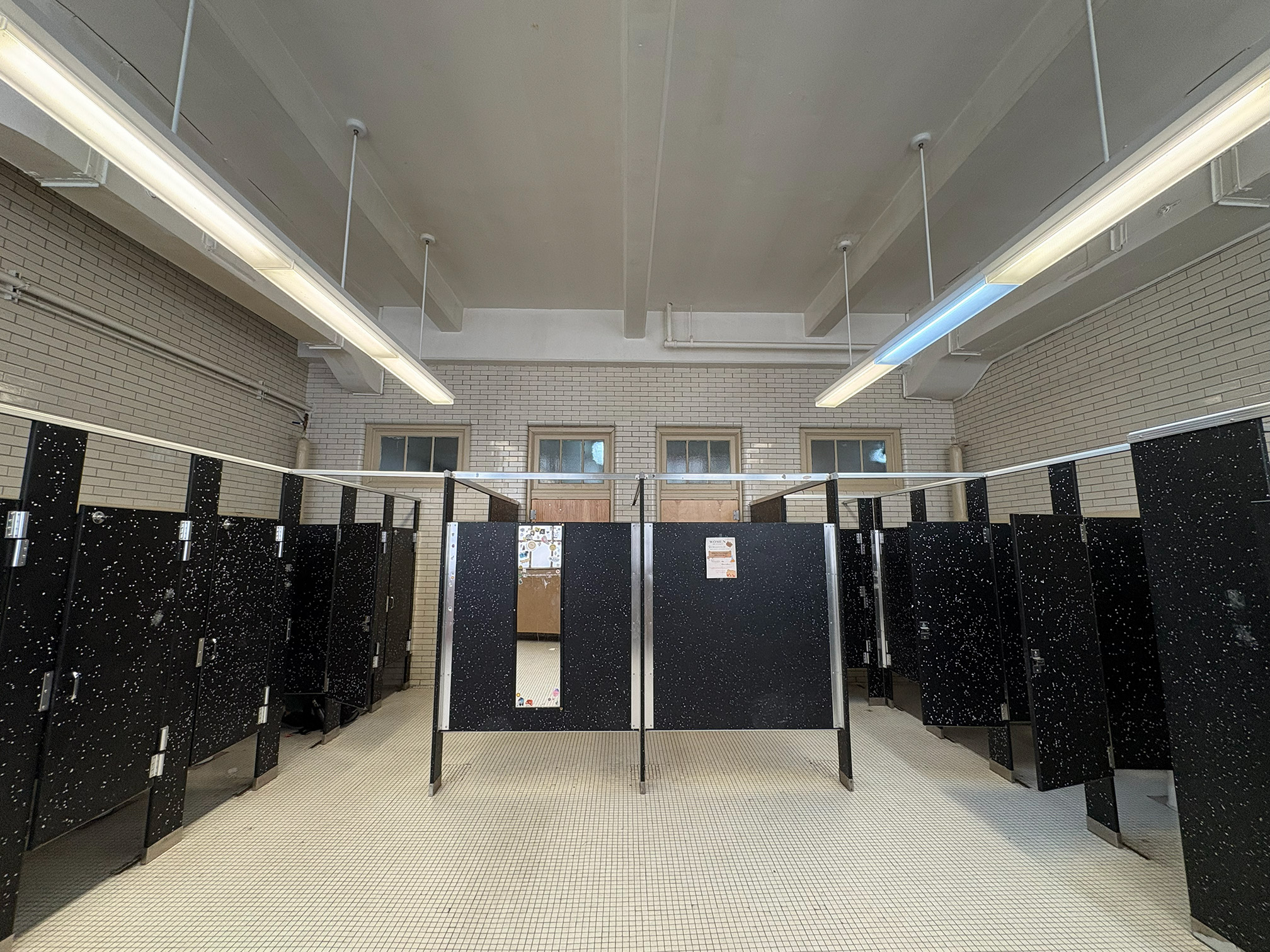
Prior upgrades have enhanced accessibility and electrical systems. However, the room falls short for its intended use.
Designing Through Constraints
Merging a 1940s-era classroom with a mid-century restroom to create a single science lab brings a set of technical challenges. Ceiling heights differ noticeably between the two rooms, shaped by existing soffits, legacy ductwork, and decades-old conduit runs that must now be concealed or re-routed. On the floor plane, we anticipate surprises. Once the original mosaic tile is removed, there is potential for water damage in the slab structure below, a condition we are planning for with contingency strategies. Beyond the physical constraints, we are also recalibrating the plumbing fixture count to ensure the renovated restroom meets code and improves on the existing condition. And because the building is subject to SHPO (State Historic Preservation Office) review, every design move must navigate the delicate balance between preserving historic architectural elements and delivering a space that supports the school’s current and future needs.
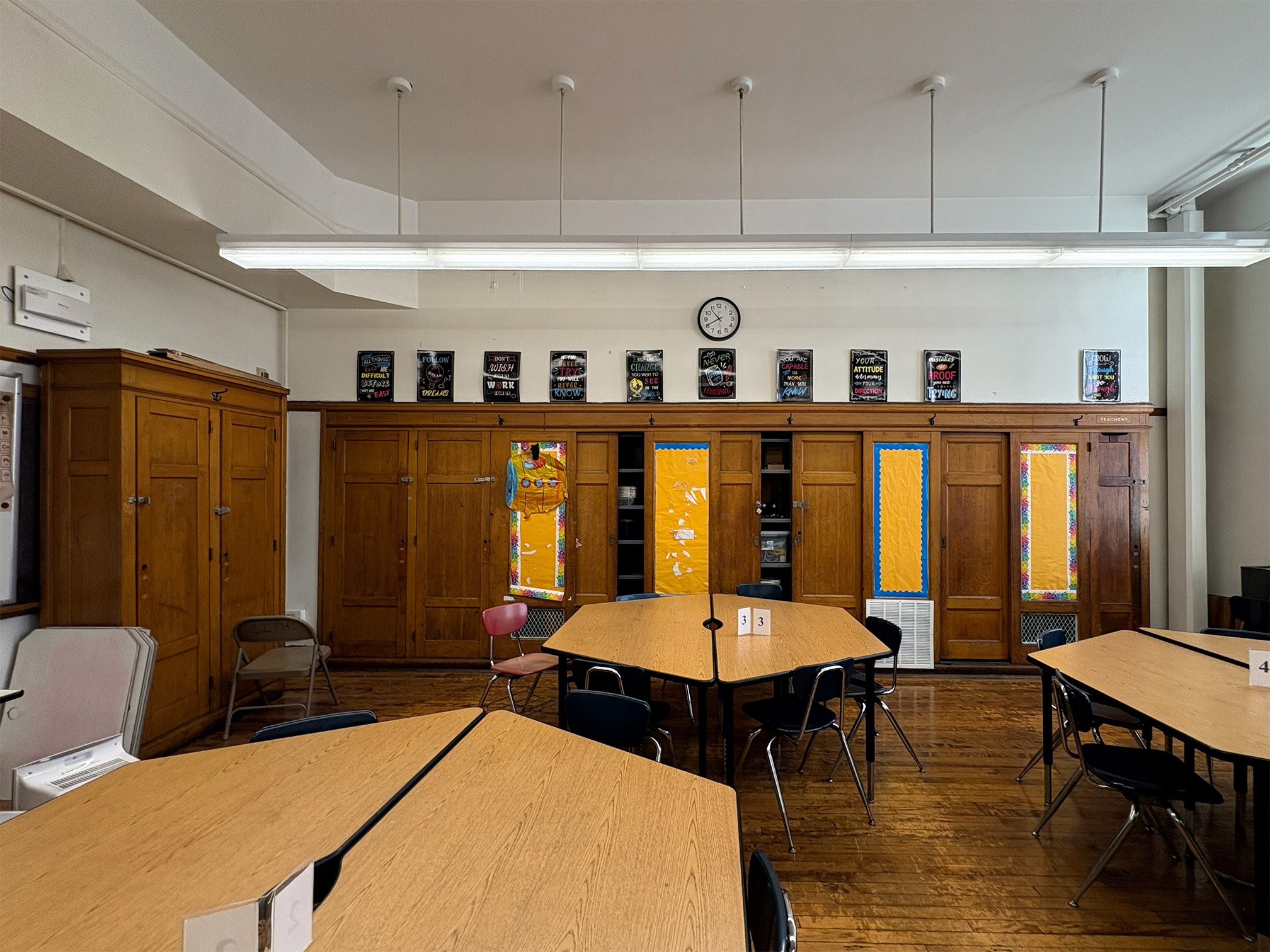
Every design move must navigate the delicate balance between preserving historic architectural elements and delivering a space that supports the school’s current and future needs.
A Science Lab for Today’s Students
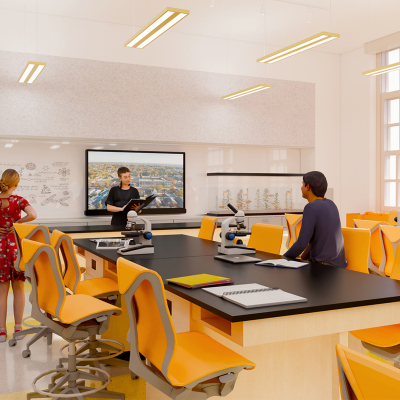
The new Environmental Science Lab will seat 36 students and feature two central rows of workbenches with built-in electrical access and storage. Perimeter sinks will support hands-on science work, and ceiling systems are designed to remain exposed to celebrate the technical function of the space while maximizing height and flexibility.
The girls’ restroom will be updated with a more equitable layout that includes accessible stalls, more sinks, and an efficient footprint that reflects real usage needs. In both rooms, finishes will be upgraded to support durability and ensure suitability for their respective programs.
Where possible, original materials and spatial qualities will be preserved. At the same time, the space is being reimagined to meet the school’s needs for the next generation.
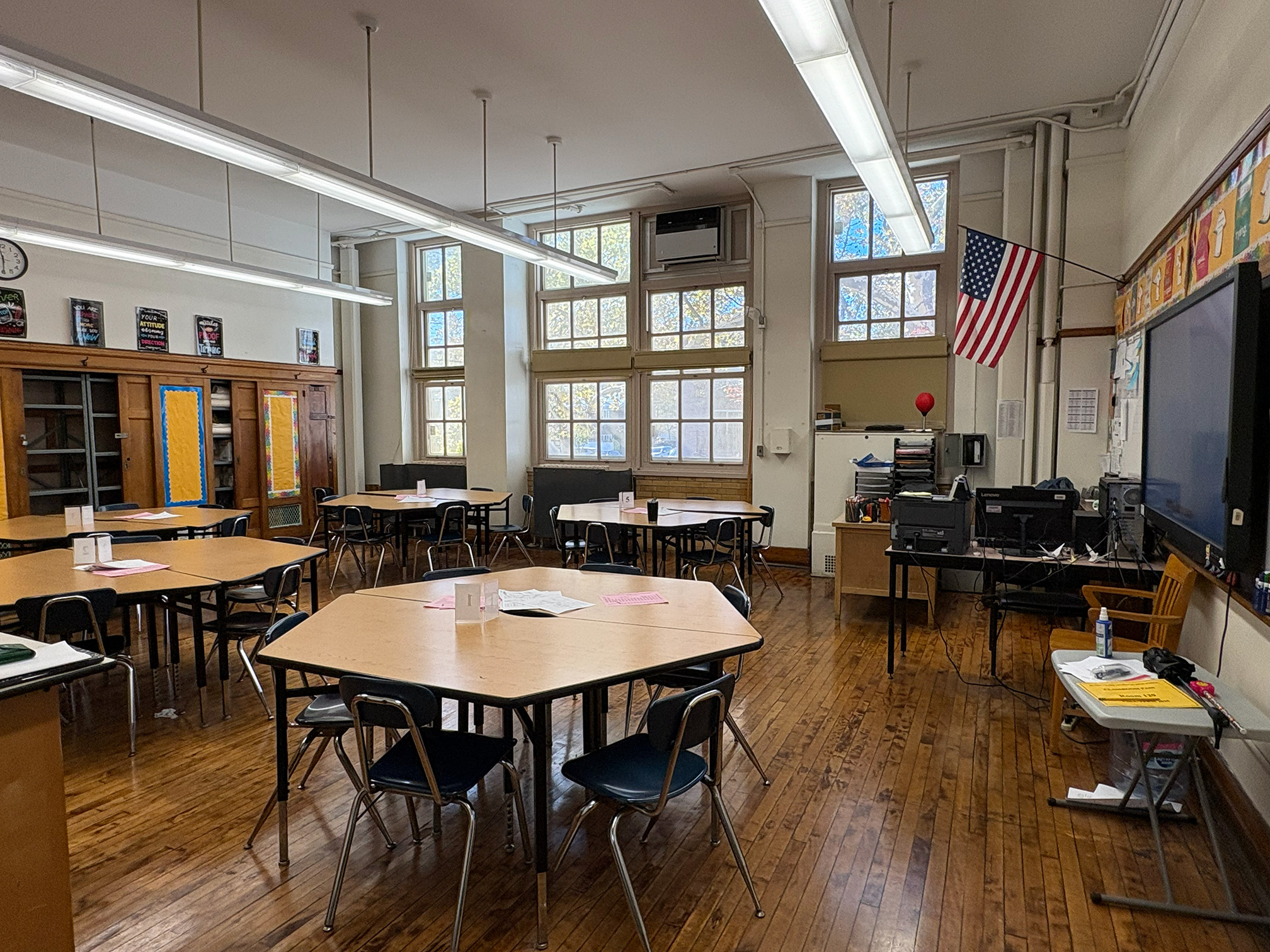
The space is being reimagined to meet the school’s needs for the next generation.
Looking Ahead
This post marks the beginning of a new SCA project and a new series from our team. In the posts ahead, we’ll share how we approach construction challenges, coordination with historic preservation agencies, and the design of learning spaces that prioritize equity, performance, and resilience.
Follow along as we turn careful preservation into purposeful transformation.
Adapting for Learning: Staten Island Tech Renovation
 Part 1
Introduction
2025.11.25
Part 1
Introduction
2025.11.25
 Part 2
Planning a State-of-the-Art Science Lab
2026.05.05
Part 2
Planning a State-of-the-Art Science Lab
2026.05.05
Share


