 and our new web domain is Circular.nyc



Designing for Durability: How Recycled Rubber Flooring Supports Sustainable Interiors
2026.09.23
 Share
Share
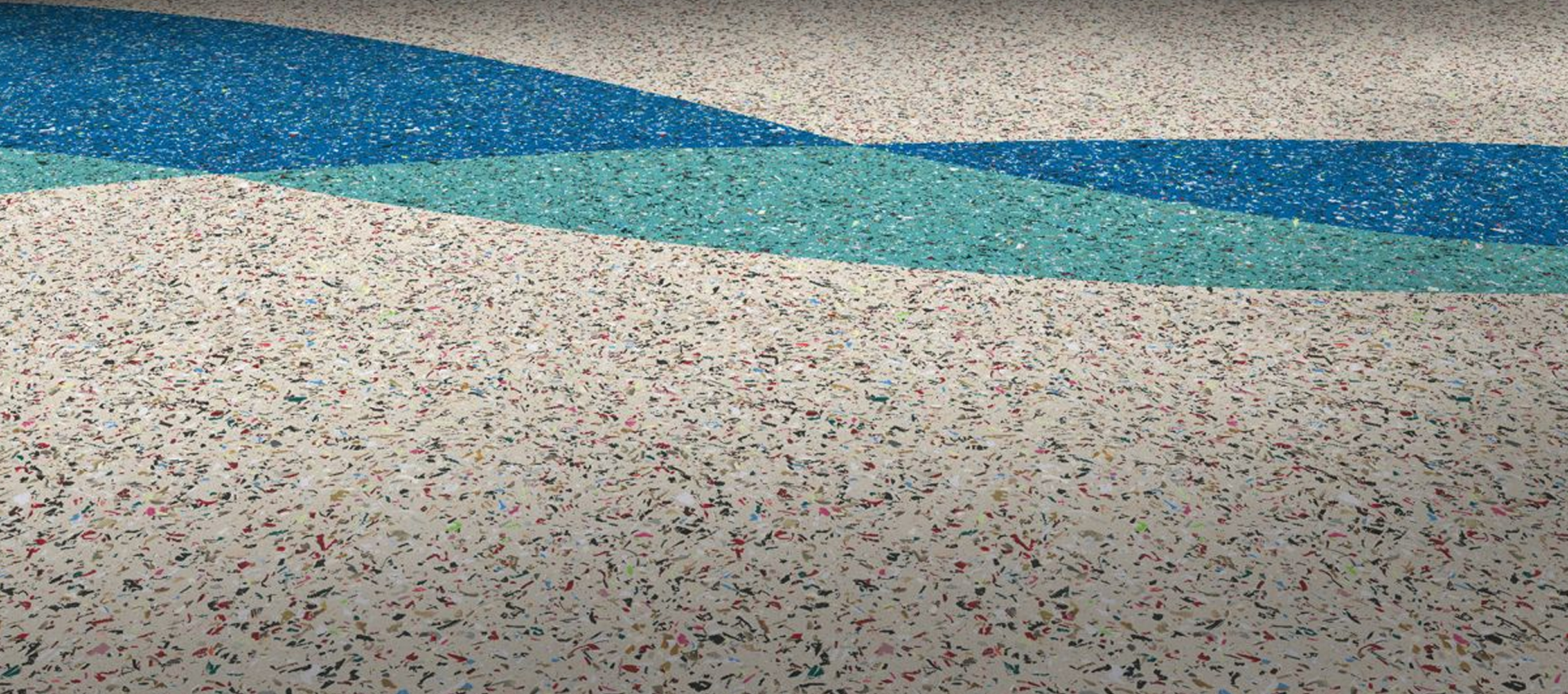
A sustainable interior should be designed to withstand the demands of everyday use while maintaining comfort, functionality, and visual appeal over time. Flooring plays an important role in this approach, particularly in environments where frequent movement, changing activities, and ongoing maintenance place significant demands on materials. Durability, resilience, ease of maintenance, and resistance to wear are essential components of long-term sustainability. Recycled rubber flooring adds another dimension by incorporating recovered material into a surface designed for intensive use. Materials that can accommodate daily wear without frequent replacement help reduce waste, conserve resources, and minimize disruption throughout the life of a space. Rubber flooring offers one example of how thoughtful specification can balance material recovery, performance, and occupant needs.
Rubber flooring offers one example of how material performance and thoughtful specification can create interiors that balance environmental responsibility with the needs of the people who use them.
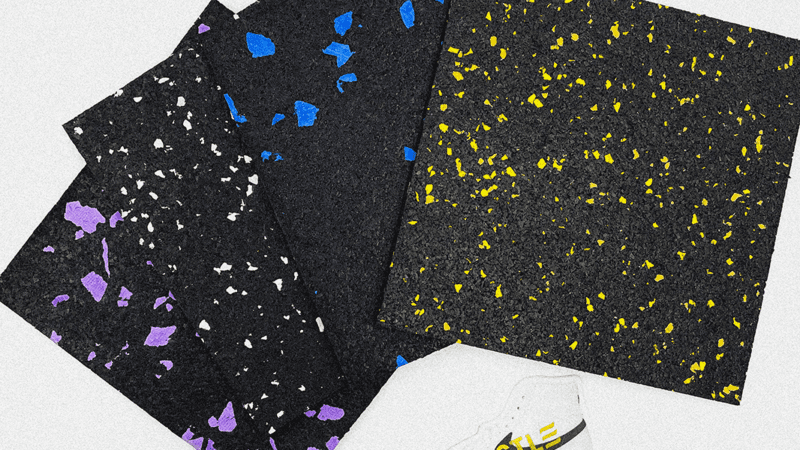
Rubber flooring can be manufactured from natural rubber, synthetic rubber, recycled rubber, or combinations of these materials, depending on the product and its intended application. Recycled rubber may incorporate material recovered from manufacturing processes or discarded products, giving existing resources another useful application and reducing demand for virgin material. The source of that recovered rubber matters. Tire-derived rubber, manufacturing scrap, and material recovered from consumer products have different compositions and performance characteristics. Environmental performance therefore depends on more than recycled content alone. Responsible sourcing, indoor air quality, emissions, durability, binders, maintenance requirements, and third-party certifications should all be considered during specification. Understanding these factors helps designers evaluate recycled content as part of a broader material strategy.
As an interior finish, recycled rubber flooring offers practical qualities that make it particularly suitable for high-traffic environments. Its resilient surface can provide cushioning underfoot, slip resistance, and durability, supporting occupant comfort in spaces where people spend extended periods standing, walking, or moving between activities. Depending on the product and installation, rubber flooring can also help reduce impact noise and improve acoustic comfort. Its availability in a range of colors, textures, aggregate sizes, and formats allows recycled material to become part of the visual character of a space, supporting wayfinding and spatial organization. Properly specified and maintained, recycled rubber flooring can accommodate intensive daily use while reducing the need for frequent repairs and replacement.
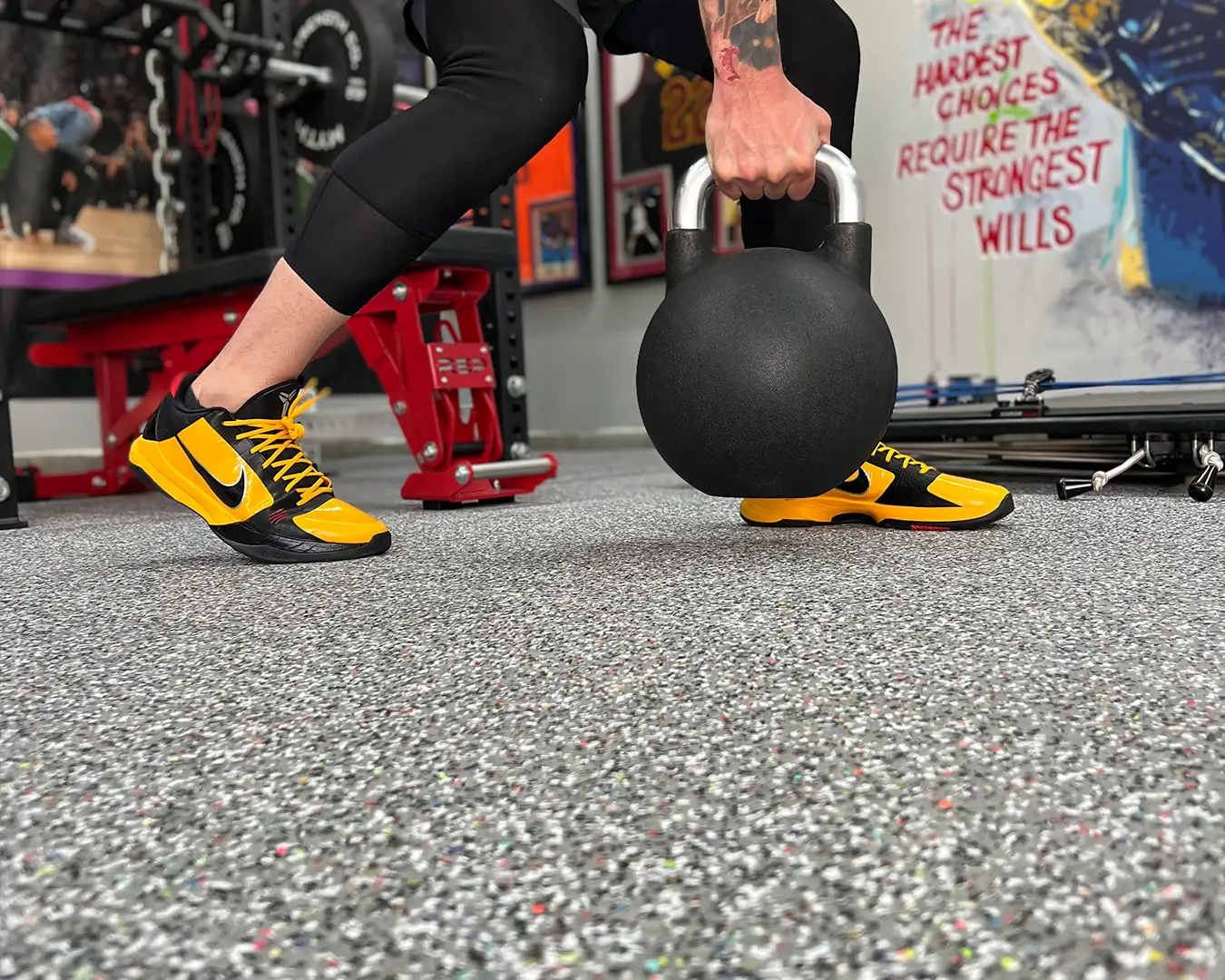
In educational, commercial, and public environments, flooring must respond to a wide range of activities while supporting accessibility, comfort, and ease of maintenance. Hero Rubber Flooring offers a specific example of how recycled rubber can be incorporated into a high-performance interior finish. Founded by Reade Palmer, Hero specializes in resilient flooring and is the authorized licensee for flooring products made with Nike Grind rubber. Nike Grind incorporates rubber recovered from Nike manufacturing scrap, unused manufacturing materials, and end-of-life athletic footwear that is processed for new applications. Hero Rubber made with Nike Grind uses this recovered material without incorporating recycled tire crumb, helping distinguish it from many conventional recycled rubber flooring products. Hero states that its Nike Grind flooring contains zero tires and therefore avoids the characteristic odor associated with tire-derived rubber. The flooring is available in rolls, tiles, and interlocking tiles, allowing designers to select formats appropriate to different performance and installation requirements.
By giving recovered rubber a new application, Hero demonstrates how material reuse can become an integral part of both the functional and aesthetic character of an interior.
At Circular, we approach materials such as Hero Rubber Flooring through a holistic design process that considers environmental performance, occupant experience, and long-term operational needs. In educational, commercial, and public environments, a resilient floor can support everyday movement, acoustic comfort, and the diverse activities of its occupants while contributing to a cohesive architectural identity. Hero's distinctive material character and use of recovered resources offer an opportunity to make circular economy principles visible within the finished space. Product selection, installation methods, maintenance requirements, and anticipated wear remain important considerations in extending the material's useful life. By combining recycled content with durability and thoughtful detailing, rubber flooring can help conserve resources, reduce replacement cycles, and create interiors that remain comfortable, functional, and engaging over time.
In educational, commercial, and public environments, a resilient floor can support everyday movement, acoustic comfort, and the diverse activities of its occupants while contributing to a cohesive architectural identity.
Share


