 and our new web domain is Circular.nyc



Designing for Adaptability: The Case for OSB
2026.08.12
 Share
Share
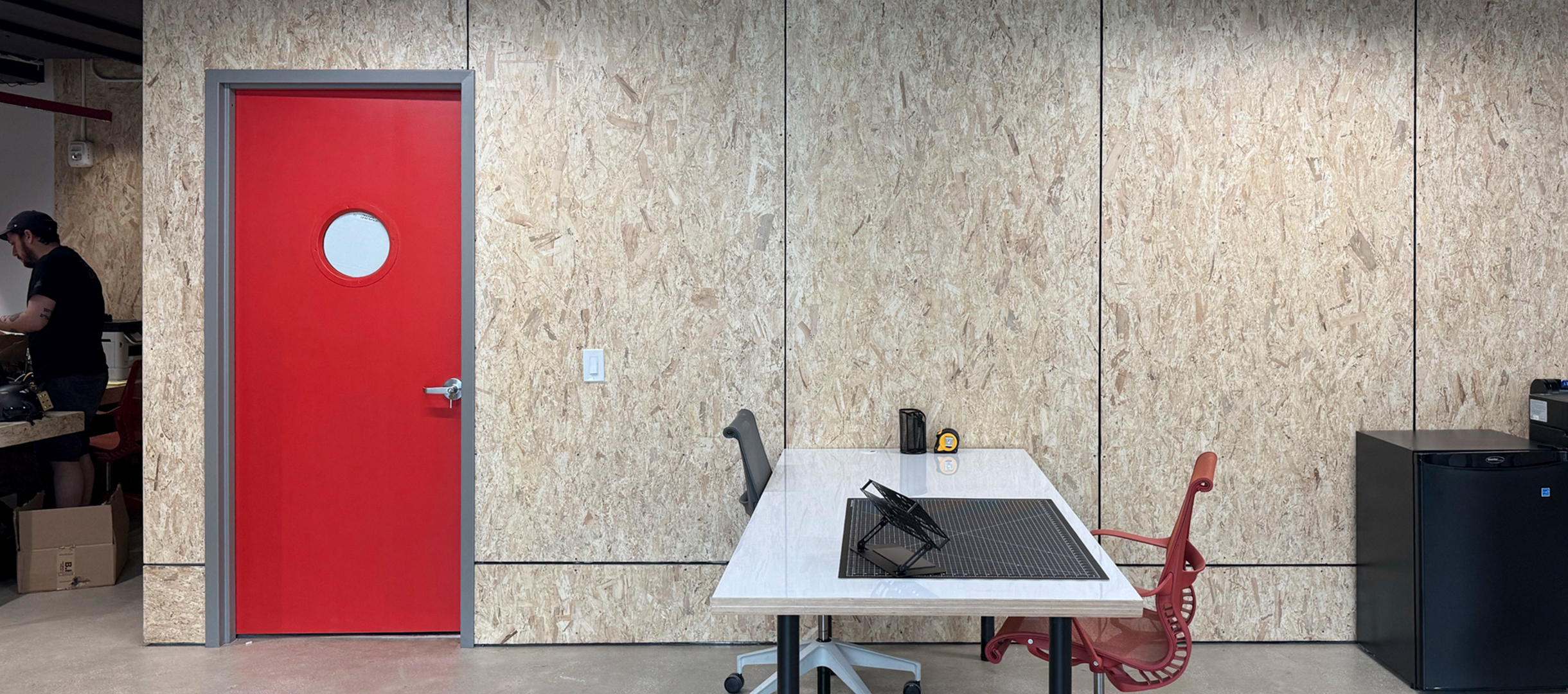
As people, equipment, programs, and technology evolve, walls and finishes must accommodate new uses and routine maintenance. Designing for adaptability, durability, and repairability can extend a space’s useful life while reducing demolition, replacement, and waste. Oriented strand board (OSB) illustrates how material selection and reversible detailing can work together to make change easier. By examining its manufacture, sourcing, and performance as an exposed finish, we can see how a modest material can become part of a flexible interior system. This shifts sustainability from the moment of completion to the many years of use that follow. The most sustainable interior is one that can change without being torn apart.
The most sustainable interior is one that can change without being torn apart.

OSB is an engineered wood panel made from wood strands that are dried, coated with resin and wax, arranged in layers, and compressed under heat and pressure. Alternating strand orientation gives the panel strength and dimensional stability. Unlike conventional lumber, OSB can use fast-growing, small-diameter trees and wood fiber unsuitable for solid boards, making use of more of each harvested tree. Yet its environmental impact depends on the specific product. Responsible forestry, regional sourcing, resin composition, emissions, recycled content, durability, and third-party certifications all deserve consideration during specification. These factors should be evaluated together rather than assuming that OSB panels offer the same environmental benefits in every project context. Choosing OSB thoughtfully is as important as deciding how it will be used.
As an exposed interior finish, OSB offers a practical advantage: it can accommodate alteration without demanding a pristine surface. Painted gypsum board, veneer, and seamless panels often reveal patches or require extensive refinishing after changes. OSB’s textured surface and natural variation help fasteners, attachments, repairs, and signs of use sit comfortably within its material character. The panels are also widely available, relatively affordable, and easy to cut, drill, install, patch, or replace. This tolerance for visible change supports routine upkeep without making every intervention a costly, disruptive renovation project. In a space designed to evolve, maintenance and modification can be anticipated parts of the architecture, not signs that the original design has failed.
In a space designed to evolve, maintenance and modification can be anticipated parts of the architecture, not signs that the original design has failed.
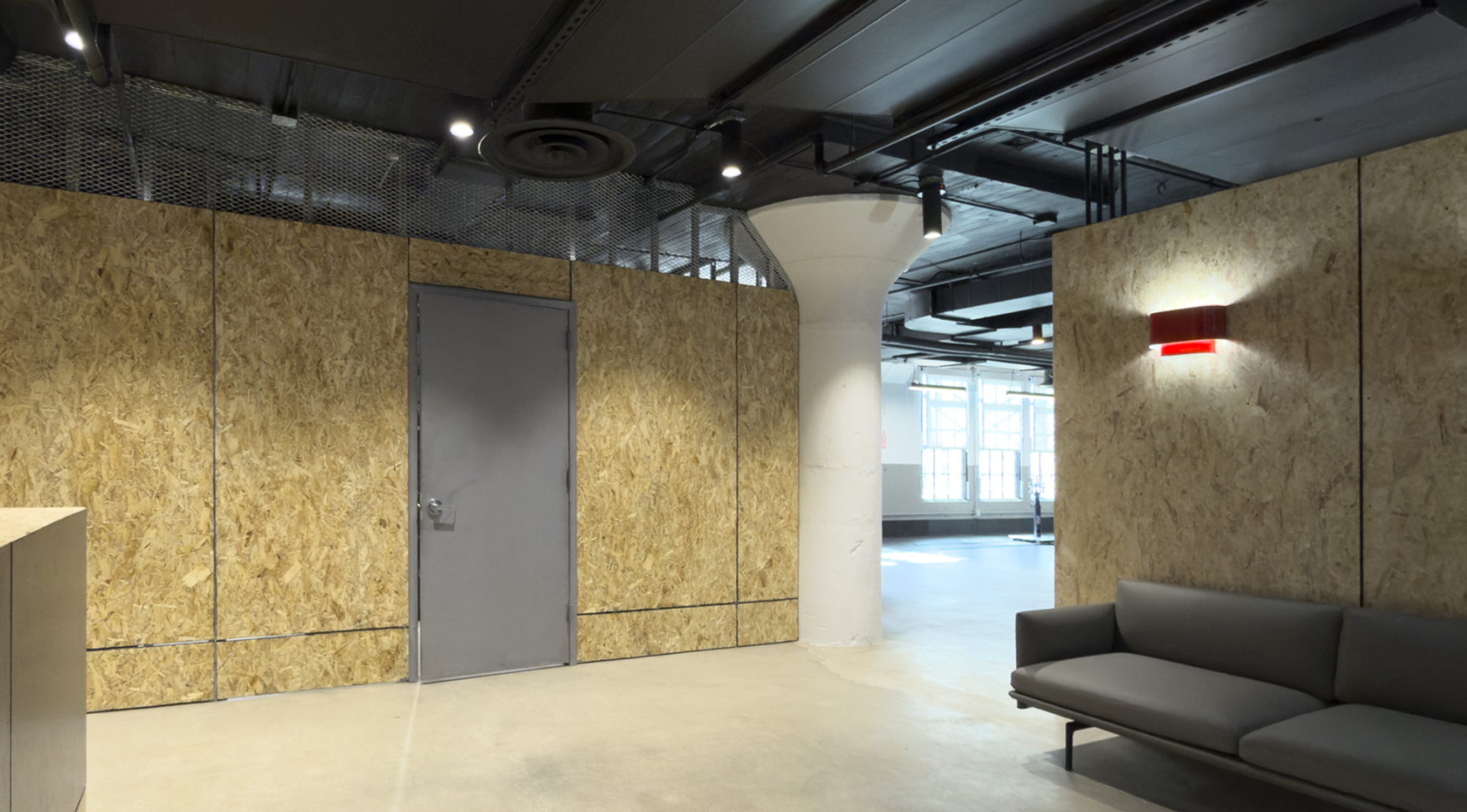
Circular recently used exposed OSB throughout a high-end technical workplace where equipment, infrastructure, and operational needs will change over time. Instead of treating the wall finish as permanent, we detailed individual panels to be removable, using mechanical fasteners selected for repeated access and adjustment. Power and data infrastructure behind the panels can be reconfigured by removing only the panel where work is needed, rather than cutting into gypsum board or demolishing a larger finished area. Afterward, the same panel can be reinstalled; if necessary, a single panel can be replaced without disturbing its neighbors. This simple approach allows outlets, cabling, displays, equipment, and work areas to evolve while limiting demolition, refinishing, costs, waste, and disruption.
OSB’s long-term value lies in the relationship between its origins, manufacture, and performance over a space’s life. Careful specification can address forestry practices, emissions, transportation, and durability. Just as importantly, reversible detailing can make future access, repair, reconfiguration, and replacement less invasive. By accepting wear and allowing localized changes, an interior can avoid repeated cycles of wholesale removal and reconstruction. In this workplace, economical panels and removable fasteners form a resilient system in which even updates to power and data can remain minor interventions. Designing for maintenance and change helps conserve resources while keeping spaces useful, comfortable, and ready for what comes next.
Designing for maintenance and change helps conserve resources while keeping spaces useful, comfortable, and ready for what comes next.
Share


