 and our new web domain is Circular.nyc



Circular, Seamless, and Sustainable: The Case for Recycled Solid Surface
2026.02.23
 Share
Share
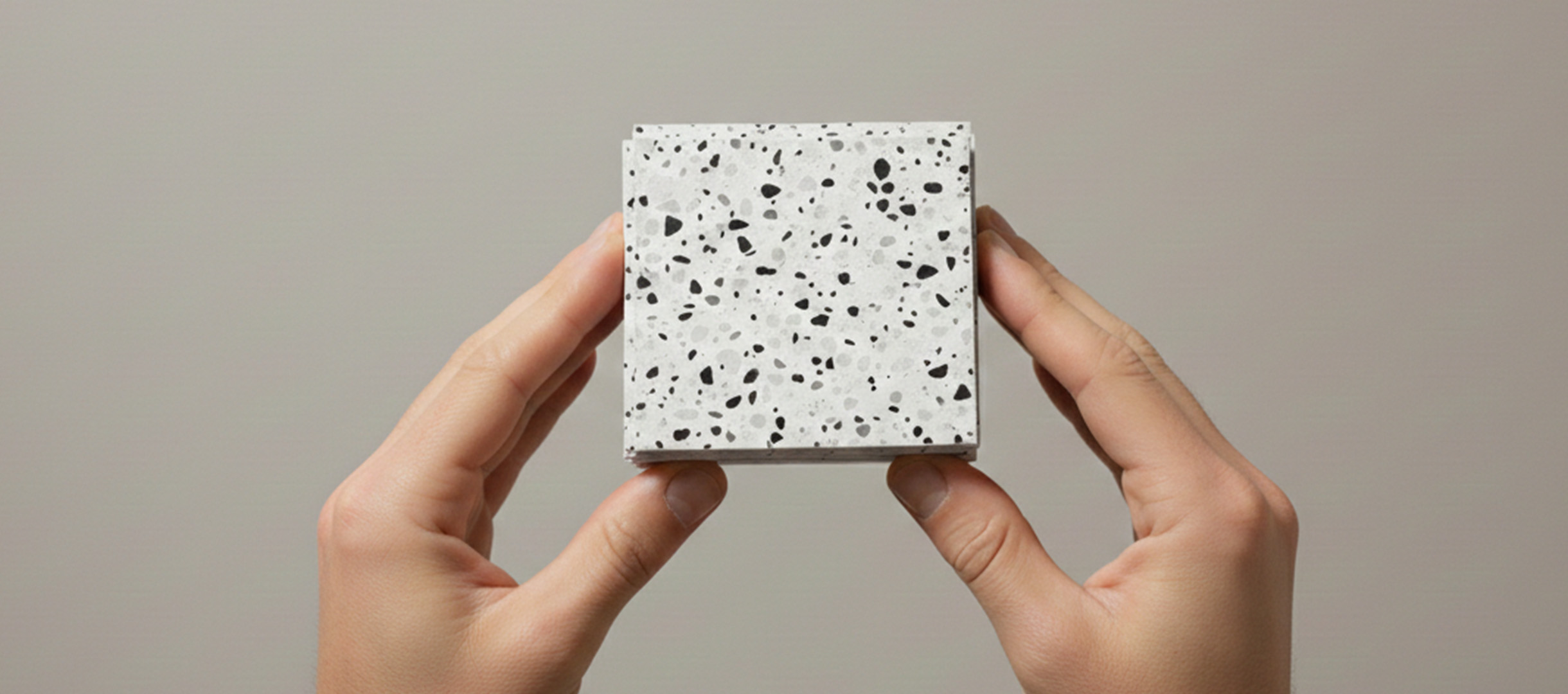
In architecture, the best materials solve more than one problem at a time. They need to be durable and beautiful, easy to work with, and aligned with the environmental goals our clients care about. One category of materials that checks all those boxes is recycled solid surface — a next-generation surfacing option we’re increasingly specifying in public and educational projects.
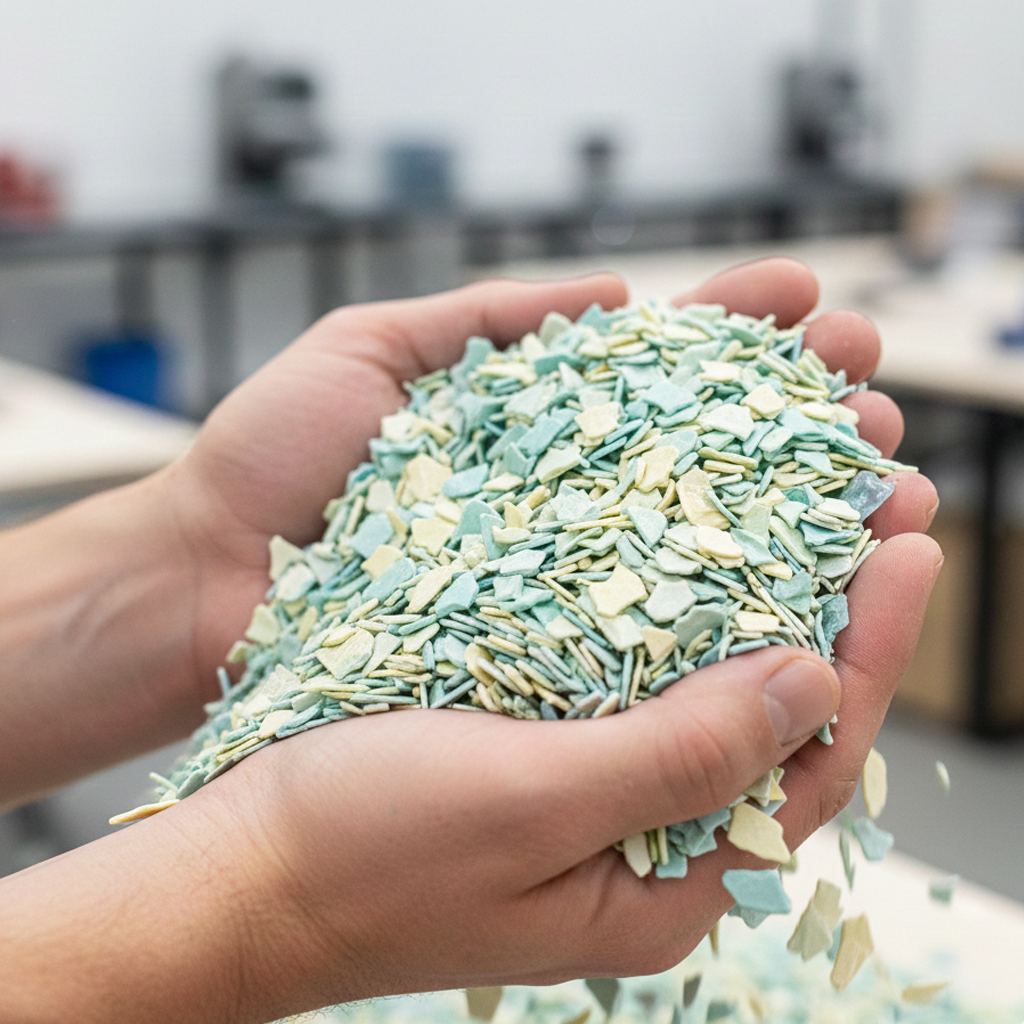
What Is Recycled Solid Surface?
Recycled solid surface materials combine natural minerals and acrylic resins into a seamless, cast surface that incorporates post-industrial or post-consumer recycled content — often 20–30% or more. The result is a smooth, premium-feeling material with subtle depth or speckled character depending on the recycled particles used.
Unlike stone or laminate, solid surface can be thermoformed into curves, joined without visible seams, and refinished over time, which means it can last for decades. At the end of its life, many manufacturers now offer take-back and recycling programs, allowing old panels to be collected, reprocessed, and made into new ones — keeping valuable material in circulation rather than sending it to landfills.
Among the growing number of recycled solid surface products, Durat is one example that demonstrates how recycled content and recyclability can coexist with design quality and longevity.
A surface that can be repaired, reprocessed, and reimagined.
Why Architects Choose It
For architects designing schools, public buildings, or community spaces, surfaces must do more than look good — they have to perform. They need to resist wear and moisture, stay hygienic with minimal maintenance, and adapt to different program needs, from restrooms to cafeterias to reception areas.
Recycled solid surfaces meet these demands with their non-porous, seamless finish, ideal for high-traffic environments. Because they can be refinished rather than replaced, they significantly reduce long-term maintenance costs and waste. Fabricators also appreciate their workability — lightweight, easy to shape, and strong enough to integrate sinks, counters, and wall panels into one continuous form.
And because many manufacturers are adopting circular production models, recycled solid surfaces support environmental certifications and sustainability goals, from reducing embodied carbon to achieving LEED or WELL credits.
Waste is not the end — it’s a resource waiting to return.
Design Flexibility Meets Everyday Performance
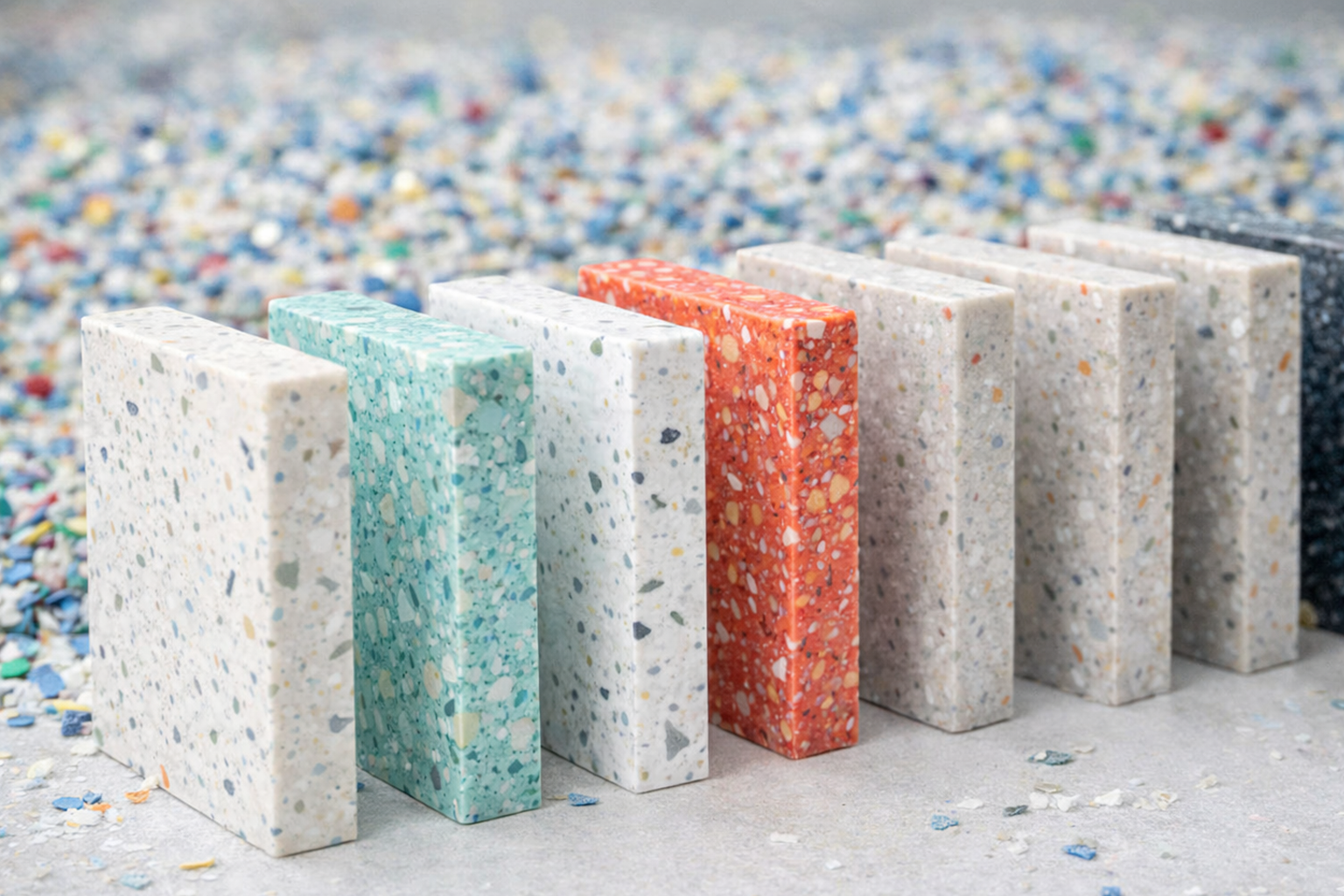
Designers value recycled solid surface for its combination of creative flexibility and everyday resilience. Available in a broad spectrum of colors — from subtle neutrals to bold tones — these materials can be customized to match any project palette. The visible recycled particles often give each surface a unique, tactile quality that pairs well with wood, metal, and concrete.
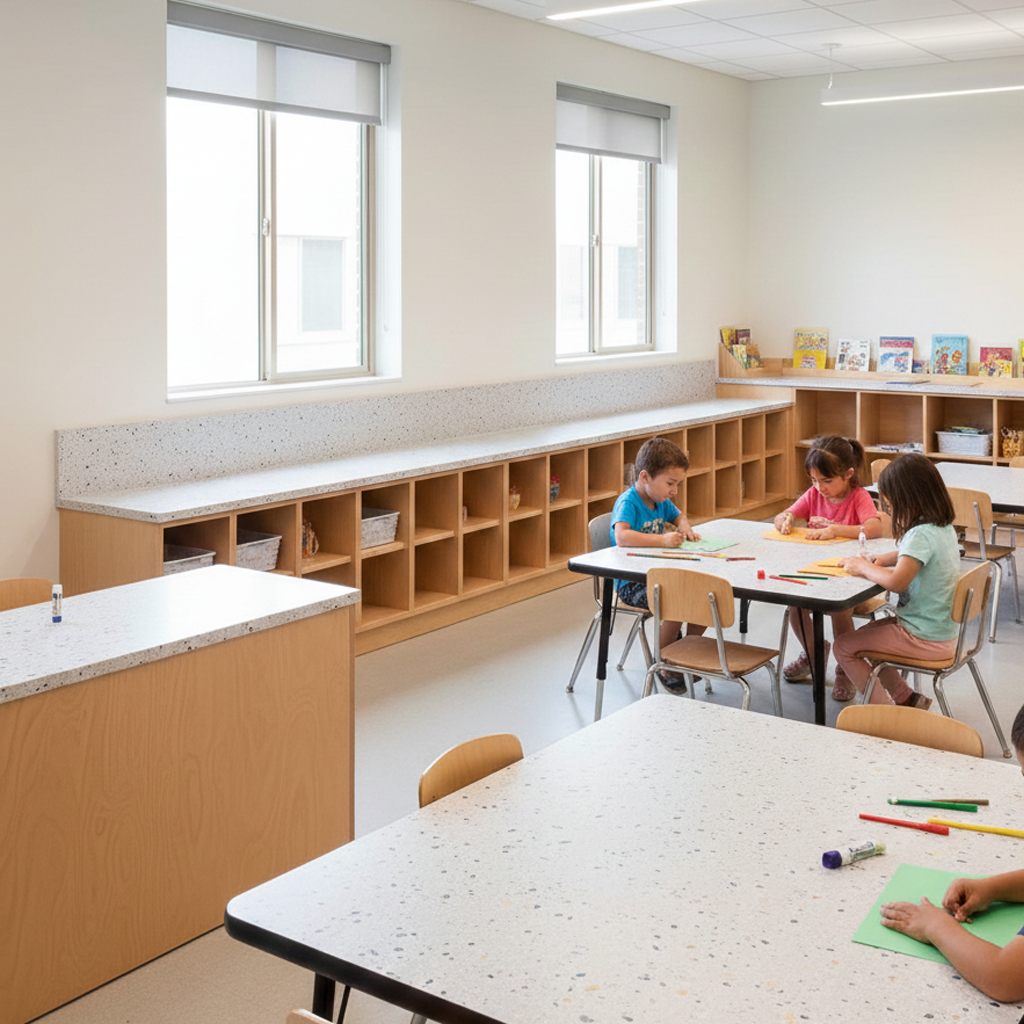
They are widely used in restrooms, cafeteria counters, library workstations, and classroom millwork, where their durability and seamless finish enhance both function and aesthetics. And because they are easy to clean and maintain, they continue to look new even under heavy public use.
Performance matters most where use is constant.
Why We’re Talking About It
As a studio focused on designing resilient, human-centered public spaces, we’re always searching for materials that deliver more than one kind of value. Recycled solid surface does exactly that — combining performance, longevity, recyclability, and sustainability in a single material system. It helps our buildings last longer, waste less, and support healthier environments for the people who use them.
Recycled solid surface isn’t just a countertop finish — it’s part of a smarter, more circular future for architecture, where durability, design, and environmental responsibility go hand in hand.
Resilient enough for everyday use, flexible enough for design intent.
Share


